
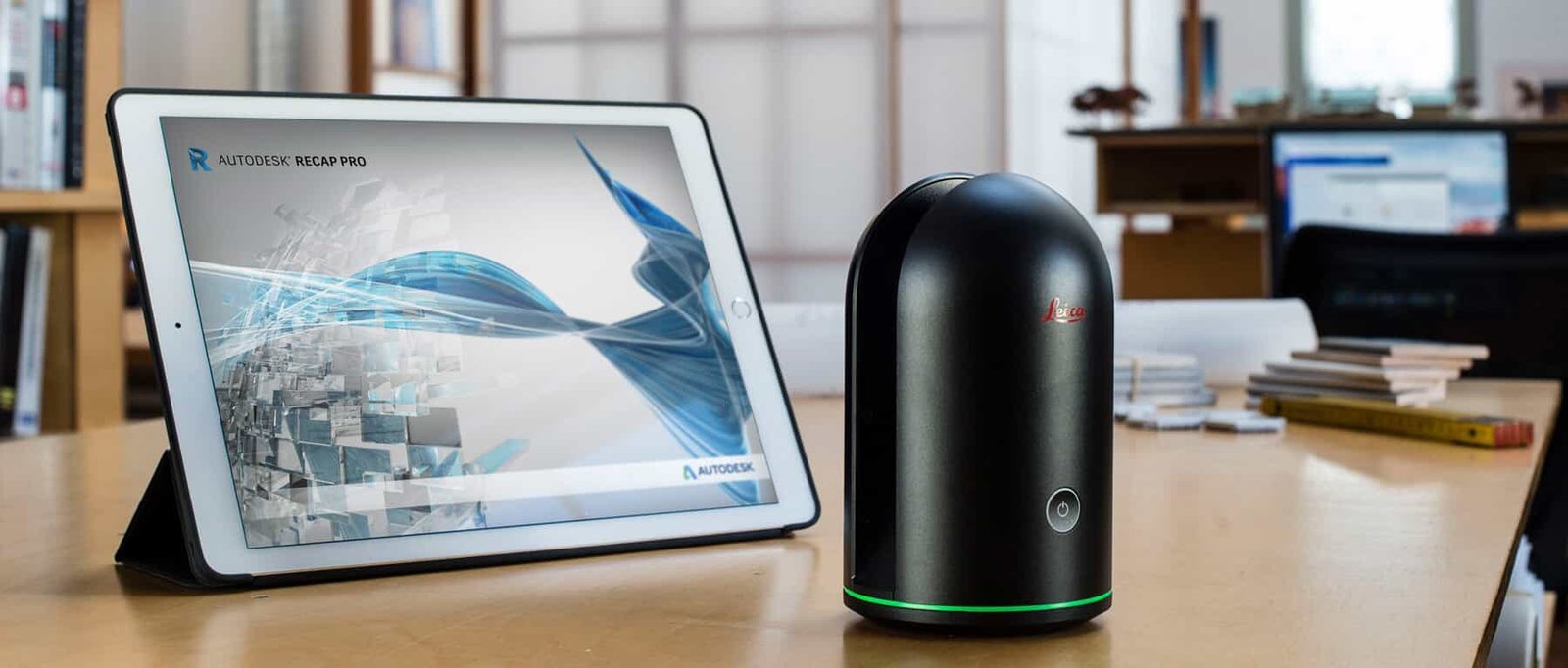
The Leica BLK360 indeed made laser scanning more accessible. It features a compact design, simple workflows, and reliable data, helping a generation of surveyors and engineers capture buildings faster than ever before.
Yet today’s construction projects rarely stay small. Before you know it, construction sites are expanding. Already, tight deadlines tighten even further, and data requirements continue to grow by the day.
So it’s no wonder that many surveying professionals are now looking for scanners that deliver even faster capture rates, longer-range options, and smarter, more intuitive workflows. That’s why they’re comparing the Leica BLK360 vs competitors, both within the same brand and outside of it.
The Leica RTC360 raised the bar even further, offering greater speed and automation than the original BLK360. Trimble, FARO, GeoSlam, and other competitors have also introduced new ways to scan to keep up, from long-range terrestrial systems to mobile SLAM solutions and even drone-based LiDAR. That leaves many professionals asking the real question: Is the Leica BLK360 still the right tool for the job?
For some modern surveying workflows, better alternatives definitely exist. We’ll break it all down in the following guide, including the differences and advantages of 10 powerful alternatives for construction, engineering, and building-scanning projects. You’ll walk away prepared to decide between the many Leica BLK360 alternatives based on their respective strengths and weaknesses.
What Is the Leica BLK360 and Where Does It Perform Best?
3D laser scanners such as the Leica BLK360 and its alternatives are used to capture spherical HDR images and 3D point clouds. The BLK360 in particular has some powerful features, but it’s no longer the fastest or most powerful option on the market.
Key Features
- Compact terrestrial laser scanner
- Useful for many construction and engineering projects
- Provides high-resolution imaging with 5-bracket high-dynamic range (HDR)
- Integrates with the Leica software ecosystem
- Simple push-button operation
Best Use Cases
- Indoor as-built building documentation
- BIM workflows
- Facility management and maintenance
- Small-to-medium surveying projects
Strengths
- Small, lightweight, and portable
- Easy to use for beginners
- Reliable output
Limitations
- Slower scan speed than newer laser scanners, with 75 seconds or more required for maximum point scan
- Limited scanning range
- Manual point registration is required, which is automated in many newer models
Leica BLK360 vs Leica RTC360 — Key Differences
When choosing a 3D laser scanner for construction projects, there’s a good chance that the Leica RTC360 is a better fit than the BLK360. Although they’re similar models, they have a few key differences.
Speed
The RTC360 scans significantly faster than the BLK360. That reduces time spent in the field, getting your team members back to the office so they can make the most of the data they’ve gathered.
Workflow
The BLK360 requires manual processing to complete registration tasks, while the RTC360 offers automated registration through Visual Inertial System (VIS) technology.
Efficiency
Due to its faster scanning speed and automated registration options, the RTC360 improves productivity on large and complex projects.
Conclusion
It all comes down to this:
- BLK360 fits smaller, simpler workflows and provides easy operation
- RTC360 fits high-speed, large-scale projects that need to stay on schedule
Why Surveying Professionals Look for Alternatives
Today’s construction projects demand faster scanning workflows, mobile connectivity for greater flexibility, long-range data capture, and higher levels of automation to support BIM and digital twin integration. The Leica BLK360 remains useful for many applications, but it’s not always enough. That’s where the comparisons between the Leica BLK360 vs Trimble vs FARO come in.
Factors for Selecting a Leica BLK360 Alternative
Comparing the best 3D laser scanners for surveying isn’t enough if you don’t know what you need. Before trying to explore the top 10 alternatives to the Leica BLK360, consider which of the following factors matter the most to your construction team.
- Scanning speed and productivity
- Accuracy and scanning range
- Performance vs portability
- Project size and scope
- Terrestrial scanning, which takes place from a fixed point, vs Simultaneous Localization and Mapping (SLAM), which provides accurate measurements while walking around
- Automation options
- Compatibility with your preferred BIM and CAD software
- Total budget and potential return on your investment (ROI)
Top 10 3D Laser Scanners Like the Leica BLK360 (Comparison Guide)
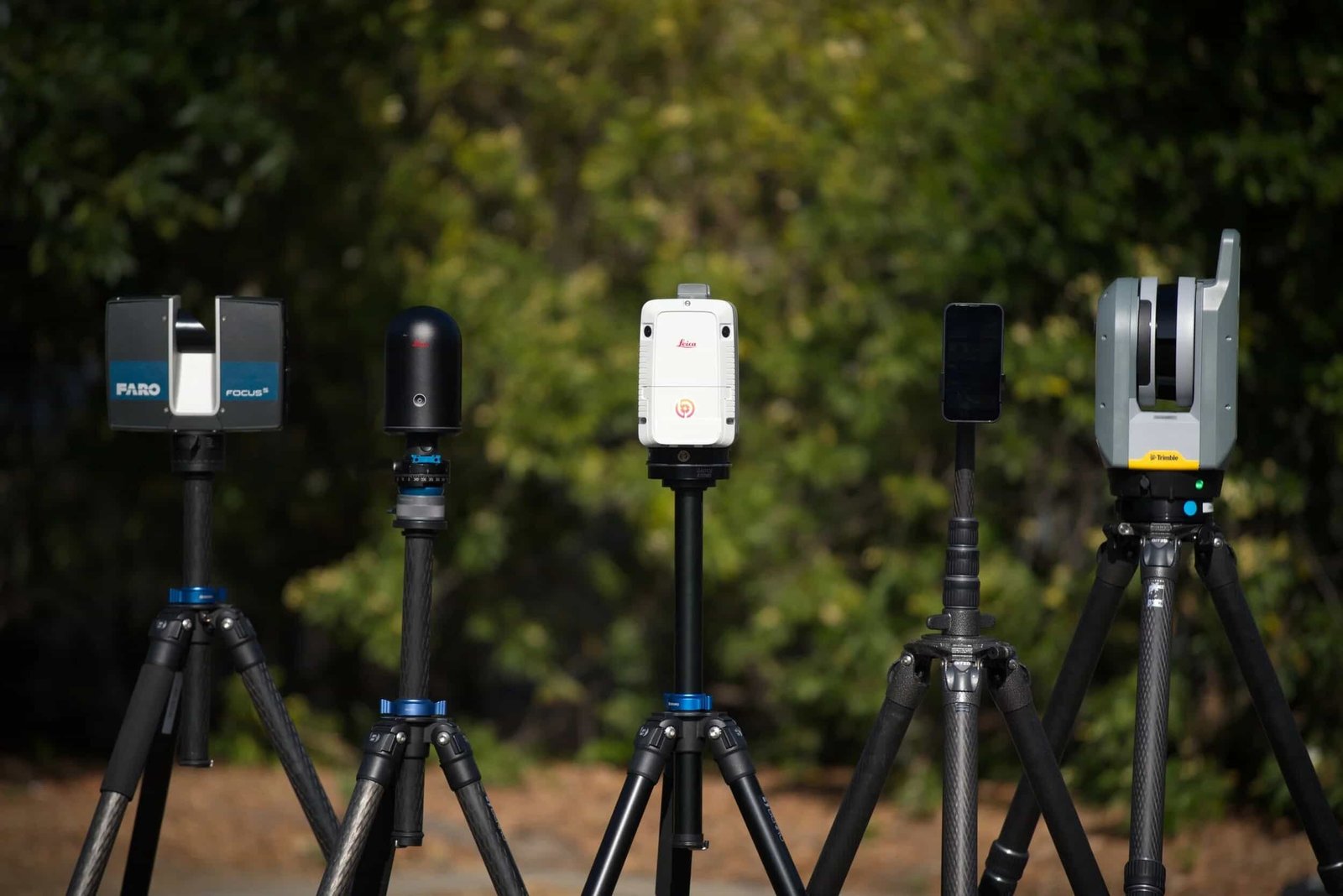
This comparison of terrestrial laser scanners gives you details on the 10 best alternatives to the Leica BLK360. The selection represents the most widely used scanner models in building documentation, construction, and engineering. Each system offers unique advantages, making it easier to choose one based on project needs.
1. Faro Focus S350
The Faro Focus S350 is a long-range terrestrial laser scanner designed for outdoor and large-scale projects that the BLK360 can’t handle. Capable of capturing 976,000 points/second, it handles distant objects and large exterior structures with ease.

Pros
- Provides up to 350 meters of range without sacrificing accuracy
- High accuracy, with a ranging error of ±1mm
- Strong performance in harsh environments thanks to an IP54 rating against dust and moisture
Cons
- Heavier and takes more effort to set up than other models
- Slower mobility reduces productivity if numerous resets are needed.
Best For: Infrastructure projects and large construction sites
2. Trimble X9
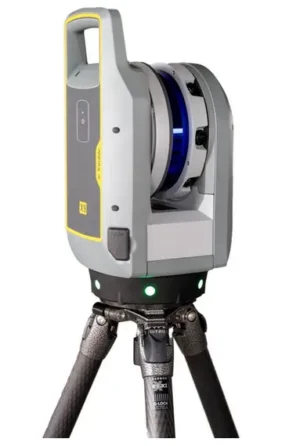
For a field-ready scanner with the advanced features to automate your workflows, consider the Trimble X9. Flexible enough to handle everything from basic construction work to advanced mining and infrastructure planning, it’s a versatile scanner with advanced features like full 3D visibility and automatic registration.
Pros
- Automatic calibration
- High-speed data capture, with scan speeds up to 1000 kHz
- Strong software integration with the Trimble ecosystem
Cons
- Premium pricing for features you can find in more affordable models
Best For: Construction surveying and engineering workflows
3. Leica RTC360
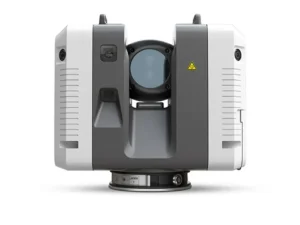
If you want to stay within the Leica brand but need a high-speed upgrade, consider the RTC360. It’s more efficient and adaptable than the BLK360 while using the same software to make the transition as easy as possible.
Pros
- Extremely fast scanning, with the potential to complete a 3D cloud in under two minutes
- Automated registration to reduce manual work requirements
- Efficient workflows almost as easy to learn as the BLK360
Cons
- Higher cost
Best For: Fast-paced professional scanning projects that need automation that other models can’t provide
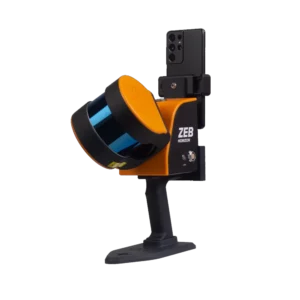
4. GeoSLAM ZEB Horizon
While extended range makes many of these options ideal for exterior use, the GeoSLAM ZEB Horizon is built to provide equally fast and accurate scans of complex indoor spaces. It’s a handheld SLAM scanner, so there’s no need to set it down and leave it alone for minutes at a time. Instead, you gather data as you go, capturing all the details in a fraction of the time.
Pros
- Highly portable and flexible enough for both indoor and outdoor use
- Fast data collection
- Ideal for complex spaces, including inaccessible areas, where you can lower the scanner in by rope or pole
Cons
- Lower absolute accuracy than other models
Best For: Indoor scanning and facility mapping
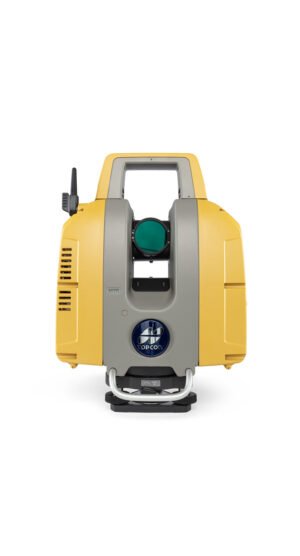
5. Topcon GLS-2200
Need a terrestrial scanner that performs reliably regardless of tough conditions with superior accuracy? The Topcon GLS-2200 is a strong contender for remote worksites, forestry, and mining jobs. Yet it also has the accuracy needed for engineering surveys.
Pros
- Strong accuracy, providing 1 mm surface accuracy at up to 150 meters
- Durable system, with automatic temperature adjustment for consistency across an entire work day
Cons
- Smaller ecosystem of compatible software
Best For: Remote work sites with temperature extremes and challenging conditions
6. Artec Ray II
Easy to transport and capable of capturing extensive 3D capture details, the Artec Ray II can measure massive features at a range of 130 meters. With the angular accuracy that only LiDAR provides, this scanner is used to track changes in infrastructure surfaces and to capture detailed digital twins of entire buildings.
Pros
- Excellent detail, with angular accuracy of 0.87 mm at 10 meters
- Lightweight and highly portable for capturing large areas
Cons
- Niche applications and high cost
Best For: Capturing massive industrial and infrastructure sites with sub-millimeter accuracy
7. RIEGL VZ-600i
Capable of capturing a complete dome scan in under 30 seconds, the RIEGL VZ-600i accelerates extensive construction and engineering projects that require data at extreme ranges. It provides unbeatable industrial-grade accuracy while optimizing BIM workflows that would otherwise take multiple days to complete.
Pros
- Extreme range and accuracy
- Industrial-grade performance
- Lighter than previous models at under 13 lbs
Cons
- Highly complex system, requires specialized training to operate
- Very high cost
Best For: Backpack or vehicle-mounted capture for large, mixed indoor-outdoor environments
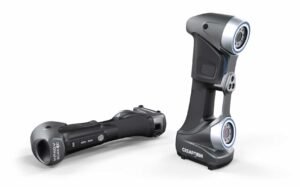
8. Creaform HandySCAN 700
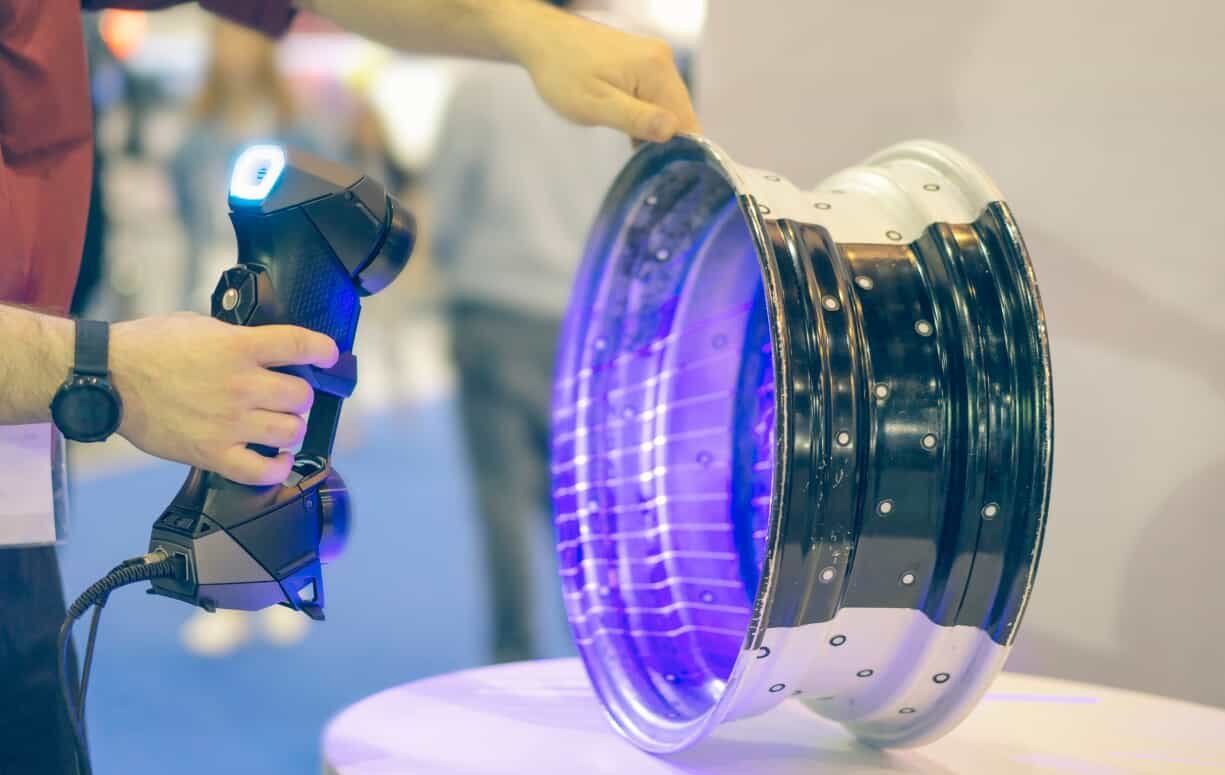
Designed for reverse-engineering parts, the HandySCAN 700 also serves as an adaptable, highly portable construction scanner. Due to its limited range but high accuracy, it’s best suited for precision work, such as planning utility cut-outs and measuring as-built details.
Pros
- Extreme accuracy of 0.030 mm
- Very lightweight at under 2 lbs
- Flexible uses across the engineering and construction fields
Cons
- Highly limited scanning range of just 30 inches maximum
Best For: Complex industrial engineering jobs and quality control of construction work
9. Leica ScanStation P40
When you need to capture 1 million points per second for high-precision surveys, even at long distances, choose the Leica ScanStation P40. It uses the same software ecosystem as the BLK360 but offers higher precision and longer range, all in a reliable package.
Pros
- Survey-grade accuracy without the need for other equipment
- Reliable long-distance scanning, up to 270 meters
Cons
- Less portable than the BLK360
Best For: Civil infrastructure projects, industrial plant retrofits, and whole building BIM modeling
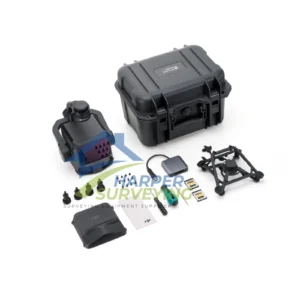
10. DJI Zenmuse L3
No matter their speed or accuracy, terrestrial scanners are inherently limited by their ground-based location. The DJI Zenmuse L3 takes to the skies, providing a drone-based LiDAR system for aerial mapping that’s faster and more effective at mapping terrain than any other option on this list.
Pros
- Fast coverage of even the largest areas and structures
- Aerial scanning capability
- Efficient terrain mapping
Cons
- Requires a separate drone platform
- Weather-dependent, limited applicability in some areas
Best For: Large site mapping and topographic surveys
Leica BLK360 vs Competitors — Key Differences
The Leica BLK360 differs from its competitors in several ways.
Speed
When it comes to speed, both the Leica RTC360 and drone LiDAR systems like the DJI Zenmuse L3 greatly outperform the BLK360.
Range
Models from FARO and RIEGL both dominate the long-range terrestrial scanning field.
Mobility
GeoSLAM and handheld scanners excel in flexibility.
Automation
Trimble and RTC360 provide advanced automation.
Accuracy
RIEGL and Trimble deliver top-tier precision.
Advantages and Disadvantages of Leica BLK360
For most construction projects and similar surveying demands, the Leica BLK360 provides both advantages and disadvantages.
Advantages
- Compact, lightweight design
- Easy workflow, even for beginners
- Reliable for small projects
Disadvantages
- Limited scanning range
- Slower scanning speeds
- Fewer automation options for registering data clouds
Choosing the Right Scanner for Your Project in 30 Seconds
Here is a quick look at the top choices based on your desired features:
- Indoor Scanning → BLK360 or GeoSLAM
- Large Construction Sites → FARO or RIEGL
- Fast and Familiar Workflows → RTC360
- Aerial Mapping → DJI Zenmuse L3
Which Scanner Should You Choose?
Only you can decide, based on project size, speed, accuracy requirements, and budget. Perform an analysis of current workflows to determine which features to prioritize and where you can save.
Final Thoughts — The Right Tool Changes Everything
This Leica BLK360 comparison should give you all the data you need to make your next move. The Leica BLK360 remains a strong entry-level professional scanner. Yet modern surveying workflows often require more speed, range, and flexibility than they can provide. Choosing the right alternative helps construction and engineering professionals capture better data, reduce time on site, and improve project outcomes. There’s no wrong choice from among the top 10 alternatives to this popular scanner.
FAQs
What is the best alternative to the Leica BLK360?
We’ve presented 10 of the best alternatives to the Leica BLK360, but only you can decide which best fits your budget and need for advanced features.
Is the Leica RTC360 worth upgrading to?
Thanks to a higher scanning speed and more automation options than the BLK360, the RTC360 is definitely a good choice for an upgrade.
Which scanner is best for construction projects?
The FARO and Riegel scanners work well for large sites, but if indoor complexity is your primary concern, the GeoSLAM model is a great choice.
What is SLAM scanning?
Simultaneous Localization and Mapping (SLAM) scanning provides accurate measurements while the operator walks or drives around, carrying the scanner.
Are drone LiDAR systems better than terrestrial scanners?
It depends on the task. When terrain readings are needed over a large area, drone-based LiDAR makes more sense than terrestrial scanning.
 English
 French
 German
 Spanish