
Surveyors need many tools to collect data when establishing reference points and boundaries. Surveying data collectors receive and process all this information. Choosing one of the best surveying data collectors is crucial to running your business well and reducing time spent on unnecessary tasks. However, not all collectors provide the same features. And not all types of surveying require the same features, either.
Instead of searching for the best data collector in general, consider how to choose the right model for your needs and workflows. This assessment compares their performance, features, and use cases to help you determine which surveying data collectors are best for construction engineers, land surveyors, and GIS professionals. Get started on your search for your next survey controller device with our surveying field controller comparison.
Features to Consider When Choosing a Surveying Data Collector
When shopping for a new surveying data collector, prioritize one or two features. Which features these are largely depends on your personal preferences and workflows. For example, WiFi connectivity may be more important for a surveyor working on roadwork. In contrast, GIS professionals taking measurements in remote areas often prioritize long battery life for their data collectors for survey equipment. So what features should you consider first when deciding how to choose a surveying data collector?
Field Durability
Durability is a major must-have feature for most surveying jobs, regardless of industry or complexity. A data collector will inevitably be dropped, knocked over on a stand, or otherwise mishandled. These collectors face wind, rain, sun, and sometimes even more challenging conditions like high heat or extreme cold.
These devices are rated by their Ingress Protection (IP) level. The first number indicates how well the device resists dust, and the second indicates its water resistance. Higher numbers mean better protection. When selecting the best data collectors for land surveying in remote and rural areas, prioritize durability. Surveyors walking over rough terrain with hidden trip hazards are likely to drop their equipment at least once or twice, and a data collector that resists damage and requires less recalibration is more valuable in this kind of situation.
Operating System
The two main operating systems for data collectors today are Android and Windows. Going with an Android data collector for surveying can provide several benefits. For example, you can run applications from the Google Play store that offer supplement data collection or annotation options.
On the other hand, Windows-based systems often allow users to install standard office software, which can make some fieldwork processes easier. However, this is largely a matter of preference and workflow. If you already rely heavily on a Windows-based software system, you may find it easier to use a data collector that syncs with your current management program. For the most adaptable experience and widest range of app options, stick with Android-based operating systems. Some high-end data collectors also offer a dual-boot OS option to help you switch back and forth as needed.
Battery Life and Data Storage
Battery life is often a primary feature for surveyors working far from any power source. You can bring a small generator or power bank to recharge while you work. However, it adds weight and can interrupt your tasks.
Long-lasting batteries let you complete hours of work without interruption. Most quality data collectors also allow you to extend storage. For handling large 3D modeling files, you can use microSD cards, USB flash drives, and other options. Or have your surveying field data collector send data directly to a storage device through a remote connection. This can reduce the need for portable storage devices or data collectors with extensive built-in storage space.
Software Compatibility
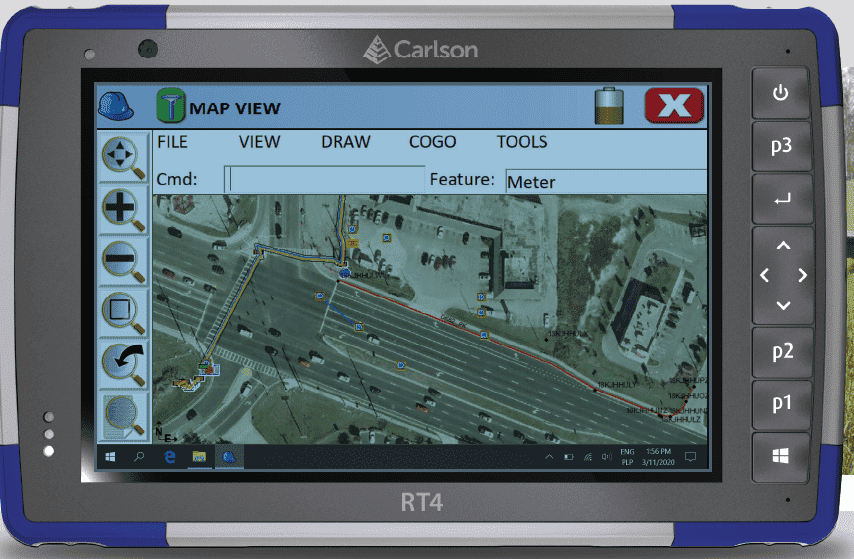
If you’re already using an established surveying software package like Leica Infinity or Trimble Access, it’s likely easiest to stick with the same kind of data collector. That way, you can enjoy seamless compatibility with the software without the need for complicated integrations or adaptations.
You should compare Trimble and Leica data collectors and their software packages together, not separately. If you worry about proprietary software with extra subscription fees or future unavailability, consider using a data collector that does not rely on it. Other freestanding options, such as SurvCE and FieldGenius, are also widely available and offer many valuable features. These software options adapt to a wide range of surveying data collector device options, giving you flexibility and freedom when you upgrade your gear.
Processing Power
Today’s best surveying data collectors do more than receive data from total stations and other tools. They can also create 3D models, point clouds, and other intensive outputs that require plenty of processing power. Multi-core processors and at least 6 gigabytes of RAM are now common in data collectors for tough jobs. Choose a model with at least 8 GB of RAM if you’re planning to handle BIM, 3D modeling, and other tasks that demand extra processing power.
Signal Options
Data collectors can communicate with total stations through several wireless protocols, including:
- WiFi
- Bluetooth
- Mobile data
- Short and long-range radio capabilities.
You need to check which methods work with your current equipment. Then, find a data collector for GNSS and total stations that offers those connectivity options. It’s not easy to change the wireless protocols used by surveying equipment, so you need to choose compatible devices from the start for a complete system that works seamlessly.
What Is the Best Surveying Data Collector for GNSSs?
Many use global navigation satellite systems (GNSSs) to augment optical surveying methods. However, advanced data collectors can provide GNSS surveying options without a base station. Only lightweight integrated receivers are needed. The U.S.-based Global Position System (GPS) is perhaps the best known, but it’s not the only option.
Eliminating the need for an additional base station not only reduces the amount of equipment you need for each job, but it also speeds up the setup and takedown process. The key is finding a GNSS-enabled data collector with the other features you need. Connectivity and compatibility with specific correction services are far from the only two details to consider. When shopping around for a data collector that works with your total stations and other surveying equipment, compare prices, advanced point averaging features, operating systems, and more.
Top Surveying Data Collectors Reviewed
These are some of the best data collectors for surveying available on the market today. No matter the type of collector you need or what features you prioritize, there’s an option here. Consider the purpose of the surveying equipment you have in mind before choosing the perfect fit.
1. Spectra Precision Ranger 7 ($2,999.00)
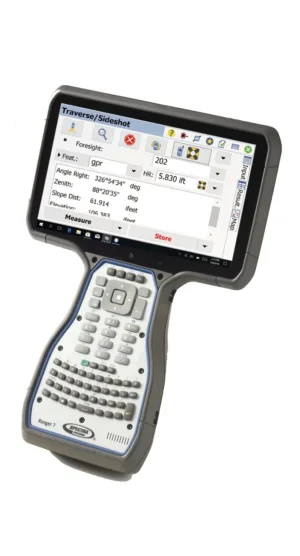
The Spectra Precision Range 7 Data Collector has a 7-inch rugged touchscreen. It is easy to read in almost any light.
This device lets you use Windows 10 surveying software while you’re on the move. It’s an excellent choice for construction managers and GIS specialists who need a portable, easy-to-use tool with a full keypad.
Features:
- Sunlight-readable 7-inch touchscreen that’s compatible with a range of styluses and input options
- Full backlit QWERTY keypad for accurate data entry and editing
- Dual-battery hot-swapping allows for continuous power and interrupt use
- Comes with Spectra Geospatial Origin field software
- Durable solid pole bracket construction for superior toughness
Pros:
- Rugged for daily and remote use
- Supports WiFi, Bluetooth, WWAN, and GNSS connectivity
- Boasts 8 GB of RAM and 64 GB of internal storage
Cons:
- Not the most powerful or adaptable option available
- Battery life is only 5 hours at most, even in optimal conditions
- Rear camera provides only 8 MP resolution
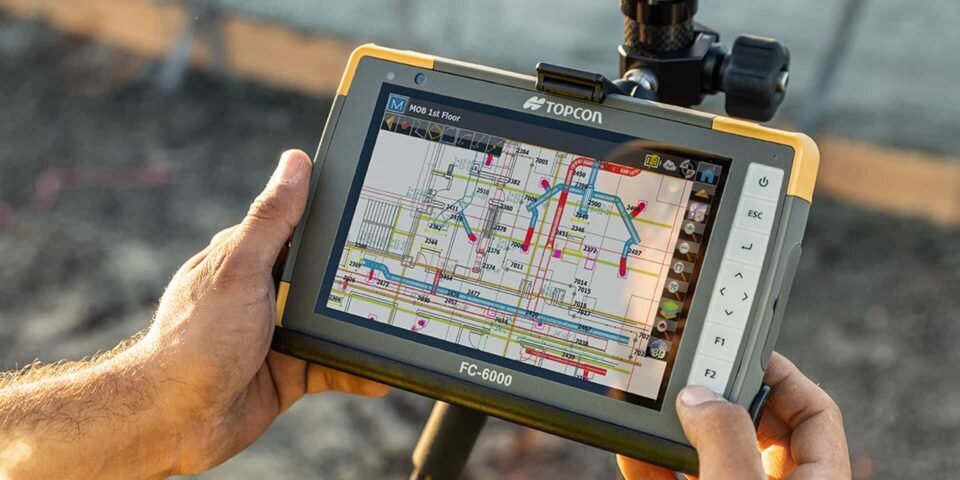
2. Topcon FC-6000 Field Computers WINDOWS 10 ($3,333.00)
Do you need a reliable Windows data collector for surveying that focuses on touchscreen capabilities? Consider the Topcon FC-6000 Field Computers Windows 10 data collector.
The tablet-style device has an IP68 rating for dust and water resistance. This makes it great for tough environments, as it offers the best protection against both. You can add a complete QWERTY keypad accessory or keep the data collector as light as possible for use in the field.
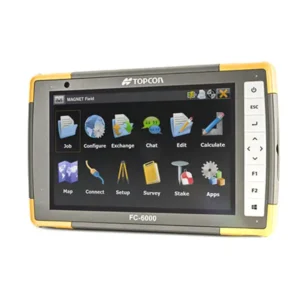
Features:
- Multi-touch capability speeds complex workflows
- MIL-STD-810G and IP68 rated for proven toughness
- Also available with Android OS
- Optional hot-swappable batteries for extended operating time
Pros:
- Highly portable and great for surveying and mapping
- Cost-effective and affordable, especially considering the 128 GB of internal storage
- Excellent visibility even in the brightest sunlight conditions
- Intel Quad-Core Pentium N4200 Processor provides plenty of power
Cons:
- 4 GB of RAM limits more advanced processing
- Cellular support is not standard, but available through an optional integrated 4G LTE cellular module
3. Carlson RT5 Rugged Tablet ($2,555.00)
The Carlson RT5 isn’t just highly rugged, with an IP65 water and dust-resistance rating. The device boasts 8 GB of RAM and 256 GB of storage, allowing it to handle the biggest GIS mapping files with power. This tablet data collector is strong enough for BIM modeling. It is also quick to use because it sets up easily with the equipment.
The RT5 provides advanced GNSS point averaging that other data collectors can’t. This makes it ideal for stake-out and construction layout.
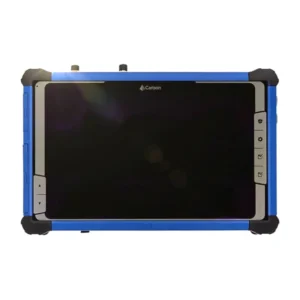
Features:
- Bundled with Carlson SurvPC, a Windows 10-based data collection program
- Choose between GPS-only surveying or connect with any SurvPC Total Station
- Provides a variety of web map overlay options like Esri OEM, Web Map Overlays, and NGS Survey Benchmark importing
Pros:
- Easily export the data in a variety of file formats
- 8-inch touchscreen provides 800 nits of brightness for visibility in all conditions
- One of the most adaptable GNSS data collectors with advanced point averaging
- Battery can provide up to 10 hours of service in the field
Cons:
- Higher cost may not work well for smaller firms and solo surveyors
- Only comes with a 2-year warranty
4. Trimble TSC7 Data Controller ($3,300.00)
The Trimble TSC7 Data Controller uses a 64-bit quad-core processor with 8 GB of RAM to handle demanding modeling tasks. This trusted manufacturer’s best model is available. It has a bright 7-inch multi-touch screen and a backlit full-sized keypad.
This GPS data collector tablet has everything necessary for construction surveying and GNSS applications. It is also MIL-STD-810G and IP68 rated to withstand the rigors of fieldwork.
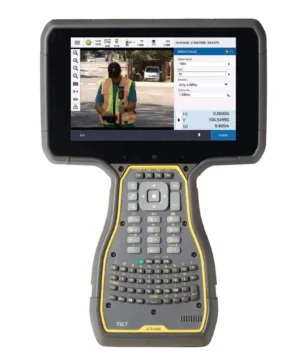
Features:
- 128 GB of storage and Windows 10 Pro
- Ergonomic design that’s built for hours of daily use
- Offers total compatibility with Trimble GNSS receivers, total stations, and Trimble Access software
Pros:
- Expand the connectivity options with user-interchangeable EMPOWER modules, including a long-range 2.4GHz radio
- Replaces the need for a rugged laptop by providing advanced processing power
Cons:
- Higher cost than many other reliable data collectors
- Doesn’t offer some of the connectivity features that other models provide as standard features
5. Trimble TDC6 Handheld Data Collector ($1,099.00)
The Trimble TDC6 is a good surveying data collector. However, some other GPS and Bluetooth devices are better for construction sites. This adaptable yet compact tablet enables contractors and construction managers to work with complex 3D datasets. Connecting with receivers and total stations is important.
This data collector also allows communication with the office. This helps get quick approvals and plan changes. This is provided on an Android operating system powered by a 2.7 GHz processor and 6 GB of RAM.
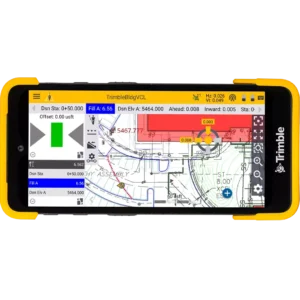
Features:
- 64 GB internal storage
- Fits into a pocket
- Wi-Fi 6E and worldwide 5G data capability
Pros:
- Works seamlessly with Trimble Siteworks Software and a Trimble GNSS Receiver for rapid site verification
- Highly affordable, even for construction teams that don’t usually invest in surveying equipment
- Connects with many third-party applications
Cons:
- Not a great fit for other surveying applications
- Only provides 7 hours of battery life
Choosing the Right Surveying Data Collectors for Your Workflow
Different data collector models are best suited to specific workflows. Here are the top data collectors for various work areas.
Land Surveying
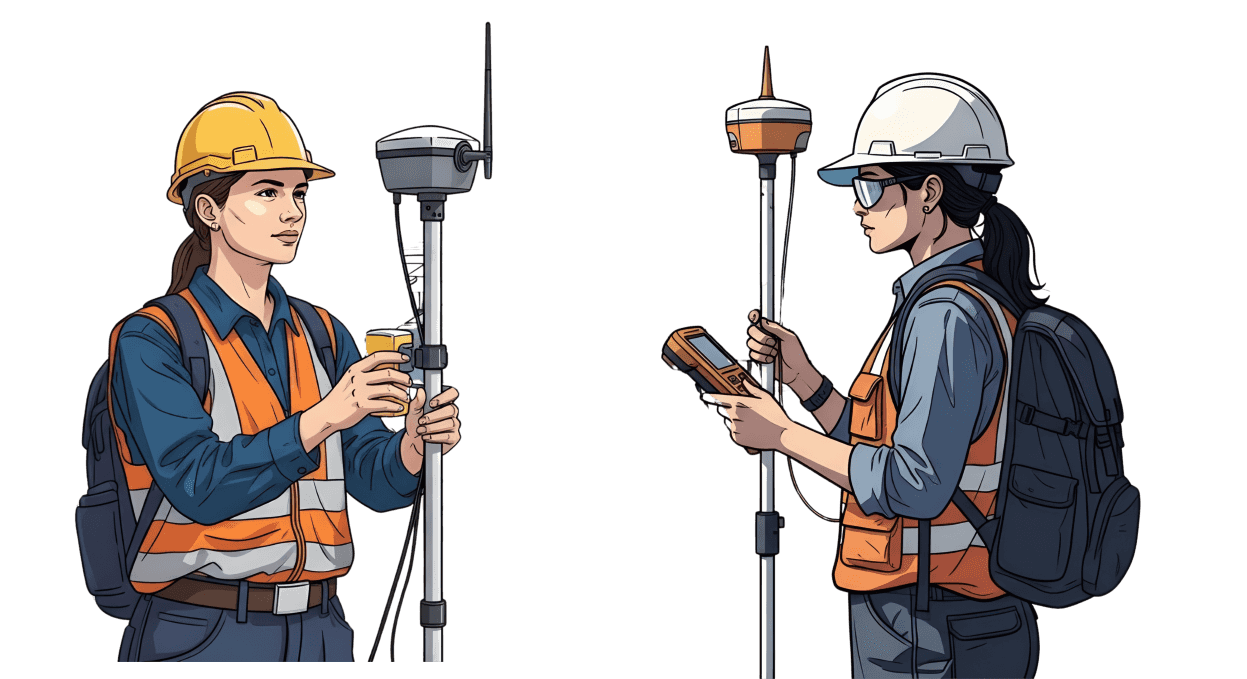
The best data collectors for land surveyors in 2026 include the Topcon FC-6000 Field Computer (Windows 10 model) and the Spectra Precision Ranger 7 Data Collector. Both can store the necessary data to map large areas.
The Spectra Precision Ranger 7 is one of the most affordable GNSS survey data collectors that’s still rugged enough for daily use on an active construction site. The Topcon FC-6000 offers a great price point as well, especially for a data collector that is both MIL-STD-810G- and IP68-rated.
Construction Layout
The top rugged data collectors for construction sites are the Trimble TDC6 Handheld Data Collector, thanks to its BIM modeling capabilities and GNSS integration, and the Trimble TSC7 Data Controller, which features a full keypad. Both of these construction data collectors are rugged enough to handle the dust and other hazards of the work site.
The Trimble TDC6 is highly affordable and provides surprising power for construction tasks. The Trimble TSC7 is both MIL-STD-810G and IP68 rated, helping it withstand the rigors of rugged, remote worksites full of moisture and drop hazards.
GIS Data Collection
For most GIS professionals, the Carlson RT5 Data Collector is the best option on this list. It has the storage and processing power to handle the biggest surveying challenges. The advanced GNSS point-averaging feature also makes it one of the top surveying data-collector models for surveyors handling BIM tasks.
A version of the Trimble TDC6 designed for GIS use is also available. Given its remote data transfer options, it may fit your plans better at a lower price point if advanced point averaging isn’t needed.
Remote Fieldwork
When it’s time to update your data collectors for construction surveying in the most challenging conditions, consider the Trimble TSC7 Data Controller and the Carlson RT5 Data Collector. They’re both tough devices that can handle work in remote fields. Extended battery life and ergonomic designs keep you focused on your work. They vary greatly in price and advanced features, so teams of all sizes and workflows can find the model that’s right for them without sacrificing durability and remote connectivity options.
Budget-Conscious Pros
For a tight budget, the Trimble TDC6 Handheld Data Collector is the best option. It’s easy to afford at any level of surveying, making it a good fit for construction teams that don’t need surveying equipment for every job.
For more extensive workloads, the Topcon FC-6000 is one of the best field data-collection devices for budget-conscious surveyors and construction managers. Experts consistently rank it among the top affordable data collectors for small survey firms, including those working on infrastructure and roadwork projects that involve large file sizes.
Final Thoughts
A total station data collector exists for every surveying purpose. Finding the right one for your needs and budget is a matter of consideration. Matching device specs, such as RAM and water resistance, to your job needs will ensure you get the performance you need. Invest in reliable Surveying Data Collectors that are field-tested and compatible with SurvCE or FieldGenius software to improve survey workflows.
You’ll find all of these controllers and more here at Harper Surveying. Explore our selection of GNSS data controllers today.
 English
 French
 German
 Spanish