
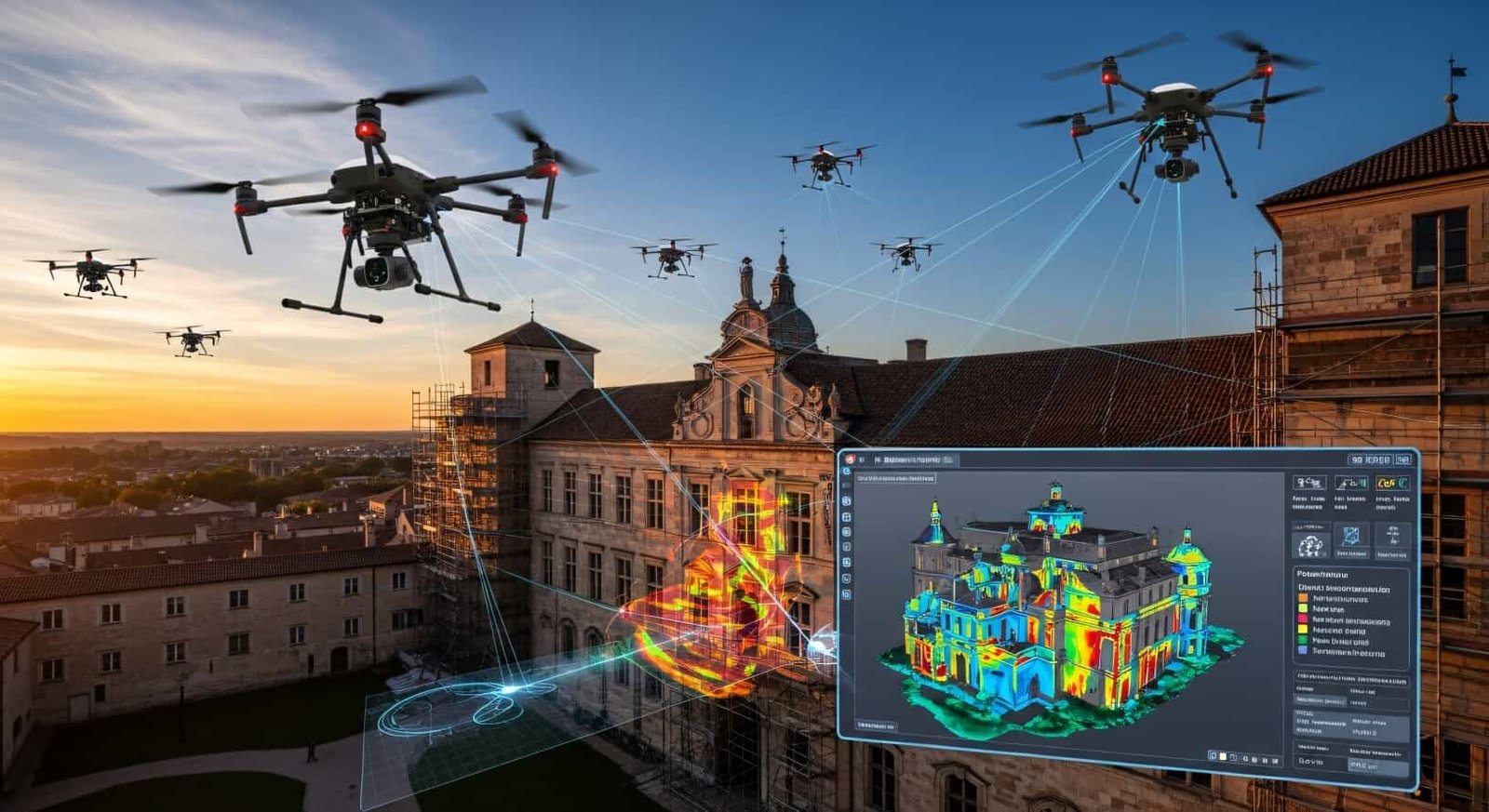
Drone mapping and surveying have become a standard part of modern construction and land measurement work, with drones now used daily to capture accurate site data in minutes rather than hours or days.
At Harper Surveying, we supply professional drones for construction and land surveying drones used by contractors, engineers, and surveyors who need reliable results in the field. Equipment such as the DJI Matrice 350 RTK and Autel EVO II Dual 640T RTK V3 are commonly used for high-accuracy mapping, inspections, and site monitoring.
The use of drones dates back to the early 20th century, when unmanned aircraft concepts first appeared in military applications. Today, drone mapping and surveying are widely adopted across construction and infrastructure projects, changing how teams collect and process spatial data.
In this blog post, we will break down the best drones for surveying and what makes each one suitable for different job-site demands.
What Drones Do Surveyors Use?
Surveying teams use three main categories of drones for drone mapping and surveying:
- RTK drones
- Photogrammetry drones
- LiDAR-enabled systems
Each type serves a different role depending on the required level of accuracy and the site’s complexity. At Harper Surveying, we supply drones for construction and land surveying drones that support all three approaches, including systems like the DJI Matrice 350 RTK and compact mapping platforms such as the Autel EVO II Dual 640T RTK V3.
RTK drones are widely used because they deliver high positional accuracy in real time. This reduces the need for ground control points, which can take significant time to place and measure manually. By using satellite correction data, RTK systems improve consistency across large survey areas and reduce the need for post-processing corrections.
In construction and land development, drones are used for topographic mapping, volumetric calculations for earthworks, site planning, and ongoing progress tracking. These outputs help teams compare planned vs actual site conditions and make faster decisions during active projects.
The range of tools used in modern surveying continues to expand, especially as enterprise systems become more accessible.

What Is the Best Drone for Mapping and Surveying?
There is no single best drone for mapping and surveying because each project has different requirements. Terrain, required accuracy, site size, and budget all influence the right choice.
At Harper Surveying, we help teams select drones for construction and land surveying that match real-world job demands, rather than relying on a one-size-fits-all approach. Key selection factors include:
- Camera resolution
- RTK integration
- Flight time
- Payload options
- Software compatibility
High-resolution cameras improve mapping detail, while RTK systems improve positional accuracy. Longer flight times reduce downtime on large sites, and payload flexibility allows for thermal or LiDAR sensors when needed.
Lightweight mapping drones are often used for smaller sites or fast turnaround work. These systems are easy to deploy and cost-effective. Heavy industrial platforms are designed for large-scale surveying, offering stronger wind resistance, longer endurance, and advanced sensor integration for complex environments.
The decision often comes down to balancing speed, accuracy, and operational scale. Some teams prioritize portability, while others focus on enterprise-level performance for infrastructure and civil engineering projects.
1. Autel Robotics EVO II Dual 640T RTK V3
The Autel EVO II Dual 640T RTK V3 is a compact mapping drone designed for fast deployment and reliable RTK accuracy. It is commonly used in drone mapping and surveying, where mobility and thermal imaging are important. We offer this platform for teams that need a balance between portability and professional-grade performance.
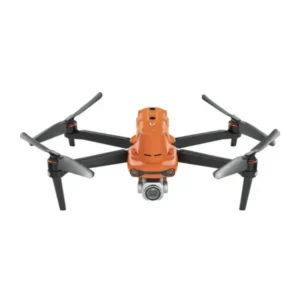
The system combines high-resolution visual imaging with a thermal sensor, allowing operators to capture both surface detail and heat signatures in a single flight. Built-in RTK functionality improves positional accuracy and reduces the need for ground control points during mapping missions.
This drone is well-suited for inspection work, smaller construction sites, and rapid survey projects where time on site is limited. It performs efficiently in environments that require quick data capture without sacrificing accuracy.
For teams that need a lightweight system that still delivers enterprise-level results, this model provides strong value. It is often chosen for projects that require flexibility, fast setup, and dependable mapping outputs.
2. DJI Matrice 210 RTK V2
The DJI Matrice 210 RTK V2 is a rugged enterprise drone built for industrial surveying and inspection work. It is widely used in drones for construction environments where reliability and payload flexibility are essential. Harper Surveying provides this platform for teams working on complex surveying and infrastructure projects.
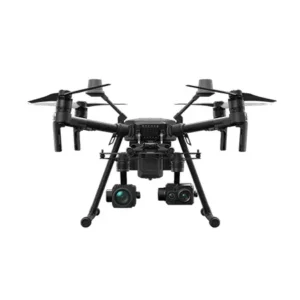
One of its key strengths is modular payload support. The system can carry multiple gimbal-mounted cameras, allowing operators to switch between visual, thermal, and specialized sensors based on job requirements. This flexibility makes it suitable for multi-purpose surveying workflows.
The Matrice 210 RTK V2 is designed for demanding conditions, including harsh weather and complex job sites. Its reinforced build quality and dual-battery system support stable performance in challenging environments.
Common use cases include infrastructure inspection, construction site monitoring, and custom sensor integration for specialized data capture. It is often selected by professional surveying teams that need a dependable platform capable of adapting to multiple project types.
3. DJI Matrice 350 RTK
The DJI Matrice 350 RTK is a next-generation enterprise drone designed for large-scale surveying and industrial applications. It is widely used in land surveying drones workflows where endurance, accuracy, and safety are critical.
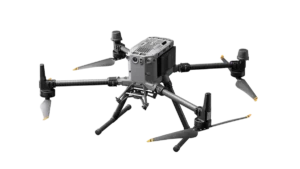
This system improves on earlier models with enhanced flight stability, upgraded battery systems, and advanced obstacle detection. These features enable safer operation in complex environments, such as infrastructure corridors and active construction zones.
Repeatable mission planning is one of its strongest advantages. Survey teams can standardize flight paths and collect consistent data over time, which is essential for progress tracking and long-term site analysis.
It is commonly used for large construction sites, highways, utility corridors, and extended mapping missions. The Matrice 350 RTK is designed for teams that require high reliability and consistent performance across repeated survey cycles.
4. DJI Mavic 3T Enterprise
The DJI Mavic 3T Enterprise is a lightweight drone designed for professional mapping and inspection work. It is commonly used in drone mapping and surveying, where portability and speed are key priorities. Harper Surveying offers this system for teams that need a compact yet capable solution.
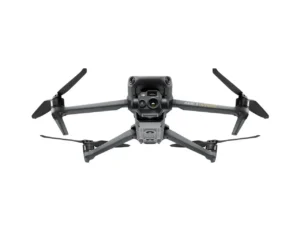
It includes both thermal and visual imaging, making it useful for a wide range of field applications. When paired with RTK support, it delivers strong mapping efficiency and reduces reliance on ground control points in many survey scenarios.
The system also includes strong zoom capabilities and improved low-light performance, which helps operators capture detailed imagery in difficult conditions. This makes it suitable for inspections that require close visual analysis without physically accessing the structure.
Typical use cases include inspections, emergency response mapping, and medium-scale surveying projects. It is often chosen by teams that need a fast-deploy system that still supports professional-level data capture.
5. DJI Phantom 4 RTK P4 Multispectral Drone for Precision Mapping and Crop Analysis
The DJI Phantom 4 RTK P4 Multispectral Drone is built for high-accuracy drone surveying and agricultural analysis, combining RGB and multispectral imaging in one system.
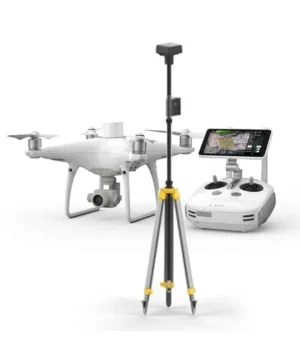
It is widely used in drone mapping and surveying for crop monitoring, environmental assessment, and field inspections. This drone is perfect for professionals who need reliable, data-driven insights from aerial surveys.
The system captures NDVI and multispectral data across five bands, helping identify crop stress, irrigation issues, and vegetation changes that are not visible to the eye. Automated flight missions allow users to map large areas quickly with minimal manual input.
Data can be processed into NDVI maps using DJI Terra, providing clear visual outputs to support decision-making in agriculture and land management.
What Surveying Teams Should Consider Before Choosing a Drone?

Surveying teams need to consider how a drone fits into their existing workflow and software ecosystem. Compatibility with mapping platforms, CAD tools, and photogrammetric software is essential for efficient drone mapping and surveying. Harper Surveying supports teams in selecting drones for construction and land surveying that integrate smoothly into their processes.
Environmental conditions also play a major role. Wind resistance, weather durability, and site complexity can all affect performance. Large open sites require different capabilities compared to urban or obstructed environments.
Regulatory requirements must also be considered. Flight permissions, pilot certifications, and mission planning rules vary depending on location and project type. These factors can influence which systems are practical for daily use.
Working with a knowledgeable supplier helps reduce selection errors. We assist teams in selecting equipment that aligns with operational needs, ensuring improved performance and fewer workflow disruptions in the field.
Common Drone Surveying Workflows in Construction
Drone surveying workflows in construction typically begin with flight planning. Operators define the survey area, set altitude and overlap parameters, and prepare missions for data capture. This step is essential for consistent drone mapping and surveying results.
During flight, RTK systems improve positional accuracy by correcting satellite data in real time. This reduces the need for extensive ground control points and improves consistency across multiple site visits.
After data capture, processing begins. Images are converted into point clouds and orthomosaics, which are then used for:
- Measurements
- Modeling
- Analysis
These outputs integrate with CAD and BIM systems used by engineering and construction teams.
The final stage connects directly to project outcomes. Teams use the data to track progress, analyze earthwork, and compare sites over time. This helps improve decision-making and reduces delays by providing accurate, repeatable site information.
Frequently Asked Questions
How Accurate Are Drone Surveys Compared To Traditional Surveying Methods?
Drone surveys can achieve very high accuracy when using RTK or PPK systems. In many construction and land surveying drones workflows, results are accurate enough for:
- Planning
- Volumetrics
- Progress tracking
Traditional tools like total stations may still be used for control points or highly precise boundary work, but drones significantly reduce field time and improve coverage across large areas.
Can Drone Survey Data Be Used For Legal Property Boundaries?
Drone data is generally not used on its own to define legal boundaries. Licensed land surveyors typically rely on ground-based measurements for official boundary work.
Drone mapping and surveying is more commonly used for planning, design, and construction analysis rather than legal certification.
How Long Does It Take To Complete A Drone Survey On A Job Site?
Time depends on site size, resolution settings, and equipment used. Small sites may take under an hour to capture, while large infrastructure projects can take several hours or multiple flights.
Processing time afterward can range from the same day to longer, depending on data volume and software workflows.
What Weather Conditions Affect Drone Surveying Work?
Wind, rain, and low visibility can impact data quality and flight safety. Strong winds can reduce stability, while rain can damage equipment or distort imagery.
Most professional drones used in drone mapping and surveying are designed for light weather resistance, but operations are usually paused during poor conditions.
Do Drone Survey Systems Require Special Training To Operate?
Yes, operators typically need training in both flight control and surveying principles. Understanding mission planning, RTK setup, and data processing is important for accurate results.
Many teams that use drones for construction rely on certified pilots or trained survey technicians to ensure reliable results.
Can Drone Surveying Work Indoors Or In GPS-Denied Areas?
Standard drones rely on GPS and are not suitable for indoor environments. However, LiDAR scanning systems and SLAM-based tools can be used indoors or in areas with weak satellite signals.
These tools are often combined with land-surveying drone workflows to achieve full site coverage.
How Often Should Drone Survey Equipment Be Calibrated Or Maintained?
Regular maintenance is recommended based on usage frequency. Cameras, sensors, and RTK modules should be checked routinely to ensure accuracy.
Many professional teams schedule calibration checks before major projects to maintain consistent results across repeated surveys.
Shop the Best Drone Mapping and Surveying Drones
Drone mapping and surveying continue to reshape how sites are measured, planned, and managed, delivering faster results with strong accuracy across projects of all sizes. Choosing the best mapping drones depends on project scale, required precision, and workflow needs.
At Harper Surveying, we help teams select and deploy reliable systems to improve field efficiency. Browse our Drone Mapping and Surveying Drones for Construction of products and choose the best option for your business needs.