
At Harper Surveying, we believe precision drives progress. With the rise of 3D laser-scanning tools, construction and surveying workers can now turn real life into digital data. This helps them make better decisions, reduce rework, and manage buildings more effectively.
Since 2001, we have focused on providing reliable, high-quality, and affordable surveying solutions. Our goal is to help professionals achieve the accuracy and productivity their projects need. Using a good 3D laser scanner can improve your work. This is true whether you are recording a historic building or handling a large infrastructure project.
What Is 3D Laser Scanning and How Does It Work?
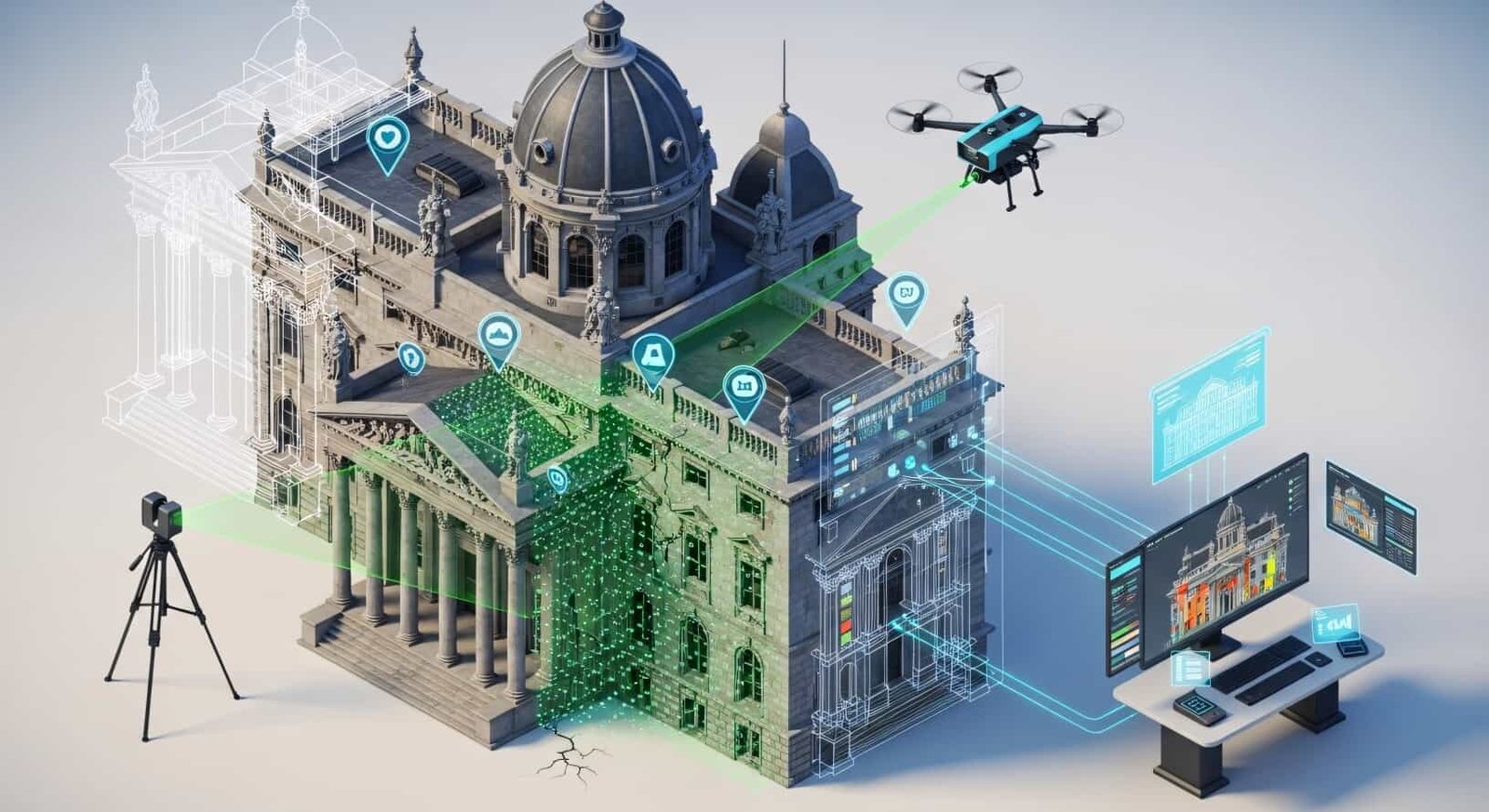
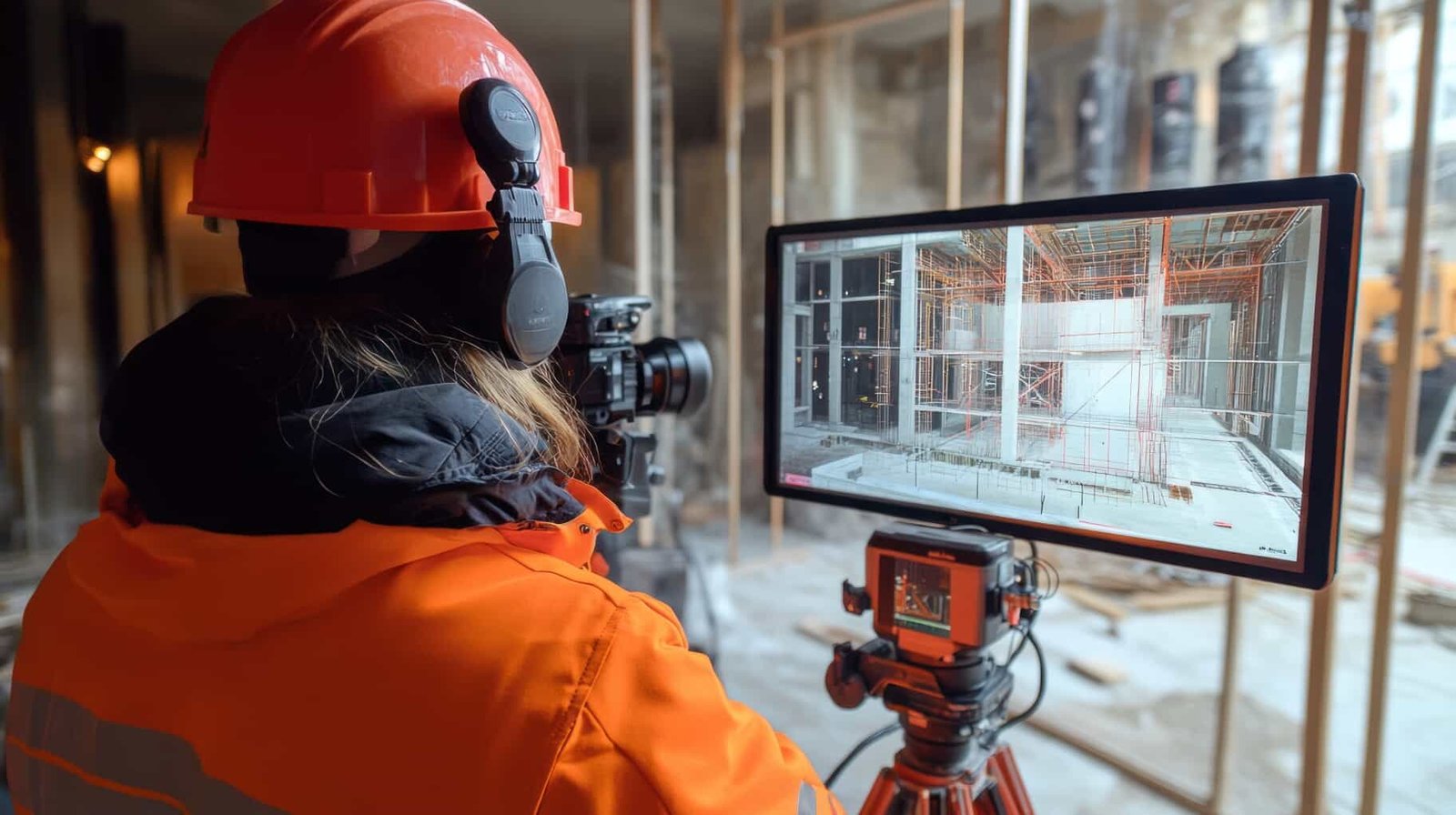
3D laser scanning captures millions of precise measurement points in minutes, creating detailed digital representations of physical spaces and structures. The technology uses LiDAR 3D laser scanning. It measures distances by timing how long laser pulses take to return from surfaces. As the scanner rotates, it collects vast amounts of spatial data, generating a point cloud—a collection of coordinates that form an accurate 3D model.
The scanning range varies by model, from compact units designed for interior spaces to long-range scanners that can capture data hundreds of meters away. Once collected, this data is well-suited for Building Information Modeling (BIM) and computer-aided design (CAD) software. This helps architects, engineers, and contractors use accurate as-built conditions rather than outdated drawings or manual measurements.
Applications span architecture, construction, renovation projects, and boundary surveying. 3D laser scanners for building surveying are now essential for professionals. They help verify structural dimensions before a retrofit. They also create detailed site surveys for new developments.
These tools are essential for those who cannot afford mistakes or delays. The benefits of using 3D laser scanning in surveying extend from initial site analysis through final as-built documentation.
Why 3D Laser Scanning Matters in Building Construction and Surveying
3D laser scanning offers significant advantages in building construction and surveying.
Key Advantages
The shift toward laser scanning for building measurement isn’t just about adopting new technology. It’s about fundamentally improving how we capture and use spatial information.
Superior accuracy for as-built documentation means you’re working from real conditions, not assumptions. A single scan session can capture data that would take days with traditional methods. This greatly reduces field time and allows your team to focus on other essential tasks.
Improved coordination between teams becomes possible when everyone uses the same, accurate dataset. Architects can verify existing conditions before design work begins. Engineers can validate their models against reality. Contractors can track construction progress with confidence by comparing completed work to the original design with millimeter-level precision.
Enhanced project visualization helps clients better understand proposals and changes. Instead of interpreting 2D drawings, stakeholders can explore detailed 3D models that clearly display what exists and what planners intend. The compatibility with CAD and BIM software allows this data to flow directly into your workflows. There is no need for manual translation or re-entry.
Benefits for Each Professional Sector
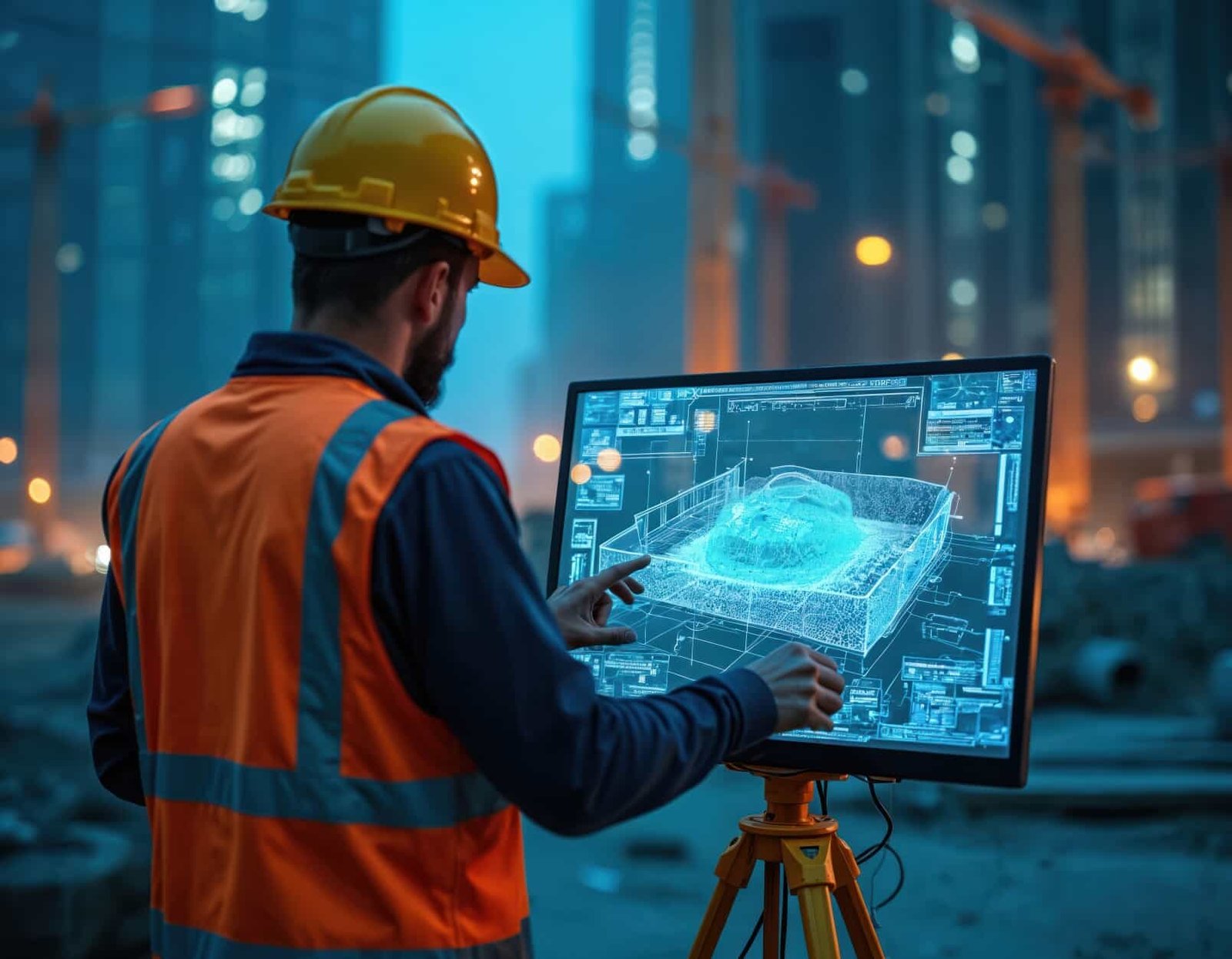
Surveyors gain streamlined topographic and boundary mapping capabilities. Complex terrain that once required extensive fieldwork can now be captured quickly and processed into contour maps, cross-sections, and volume calculations. The best 3D laser scanners for surveying deliver reliability across diverse site conditions.
Architects access detailed floor plans and structural verification data that inform design decisions from the start. The best portable 3D scanner for architects makes it easy to measure existing buildings.
This helps with additions or renovations. It removes the guesswork that can cause changes in the field and budget overruns. 3D scanning for architecture and engineering has become the standard for renovation and restoration projects.
Engineers benefit from data-driven modeling and design validation. Structural assessments become more reliable when based on precise measurements rather than visual estimates. Clash detection between new systems and existing structures happens in the office, not on site.
Contractors improve progress tracking and quality assurance throughout construction. Regular scanning creates a record of work done. This helps settle disputes and check that installations meet specifications before moving to the next phase.
Factors for Selecting the Right 3D Laser Scanner
Understanding how to choose a 3D laser scanner starts with evaluating your specific project requirements against available features.
Accuracy and Range
Different projects demand different precision levels. Indoor scanning for room layouts may only need accuracy within a few millimeters. However, structural monitoring needs precision within a sub-millimeter range. A high-accuracy 3D scanner for construction ensures reliable data regardless of project complexity.
Range matters too. What works for a single room won’t efficiently capture an entire construction site.
Portability
Compact, lightweight designs improve efficiency when your team needs to move between multiple locations throughout the day. Handheld scanners offer maximum mobility but typically sacrifice some range compared to tripod-mounted units.
Speed and Efficiency
Faster scanning means higher productivity and less disruption to ongoing work. Modern scanners can capture millions of points per second, completing room scans in under two minutes.
Data Integration
Seamless integration with your existing BIM and CAD software prevents workflow bottlenecks. Look for scanners that export in standard formats and work with the platforms your team already uses.
Durability and Weather Resistance
Construction environments are harsh on equipment. If you’re scanning outdoors or in dusty, wet conditions, choose models built to withstand the elements.
After-Sales Support
Training, maintenance, and calibration services keep your investment performing at peak capability. At Harper Surveying, we offer guidance to help you match your workflow with the right 3D laser scanning equipment for your field conditions and budget.
The Top 5 3D Laser Scanners for Building Construction and Surveying
Below are the pros and cons of the top five 3D laser scanners for construction and surveying.
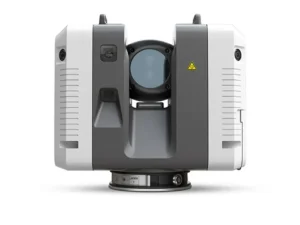
1. Leica RTC360 3D Laser Scanner
The Leica RTC360 excels at large-scale construction projects requiring high-speed data capture. It serves professionals who need to document expansive sites quickly without compromising accuracy.
Pros:
The 2 million points per second capture rate means you spend less time in the field. Automatic field registration connects multiple scan positions without manual intervention, streamlining your workflow. The system integrates beautifully with BIM platforms, making it a natural choice for firms committed to digital construction practices.
Cons:
Premium pricing positions this as a professional-grade investment rather than an entry-level option. The advanced features justify the cost for firms handling complex builds, but smaller operations might find better value elsewhere.
Best For:
Construction companies and engineering firms that manage complex projects. Here, speed and precision affect timelines and budgets.
2. Leica BLK2GO Handheld Imaging Laser Scanner
This lightweight mobile scanner puts 3D capture literally in your hands. Walk through spaces while the Leica BLK2GO builds accurate models in real time. Many consider it one of the best portable 3D scanners for architects who need mobility without sacrificing data quality.

Pros:
Exceptional ease of use makes training quick and adoption smooth across your team. Real-time visualization lets you see data quality as you scan, so you can catch any gaps before leaving the site. Perfect for interiors, renovations, and facilities management where mobility matters more than long-range capture. This makes it particularly valuable for laser scanning for renovation and restoration work.
Cons:
The handheld design and shorter range make it less suitable for outdoor sites or large open spaces where tripod-based scanners shine.
Best For:
Architects, interior surveyors, and facility managers who need to document existing conditions quickly without the setup time required by traditional scanners.
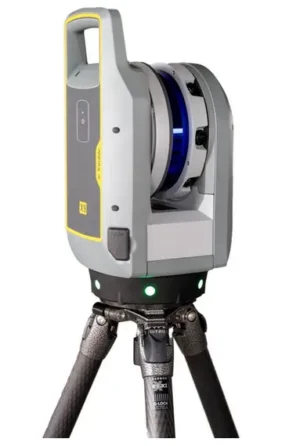
3. Trimble X9 3D Laser Scanner
Designed for precise, automated 3D scanning with advanced imaging capabilities, the Trimble X9 handles demanding outdoor environments with confidence. It’s a top choice among the best 3D laser scanners for surveying in challenging conditions.
Pros:
Long-range accuracy extends your capture radius, reducing the number of scan positions needed on large sites. Weather-resistant construction keeps you working through less-than-ideal conditions. Integration with Trimble’s software ecosystem creates a complete solution for firms already using their platforms.
Cons:
The advanced features require operator training to be fully exploited. Plan for a learning curve if your team is new to automated scanning systems.
Best For:
Outdoor construction sites and infrastructure projects where durability and range are non-negotiable requirements.
4. Creaform Go! SCAN SPARK
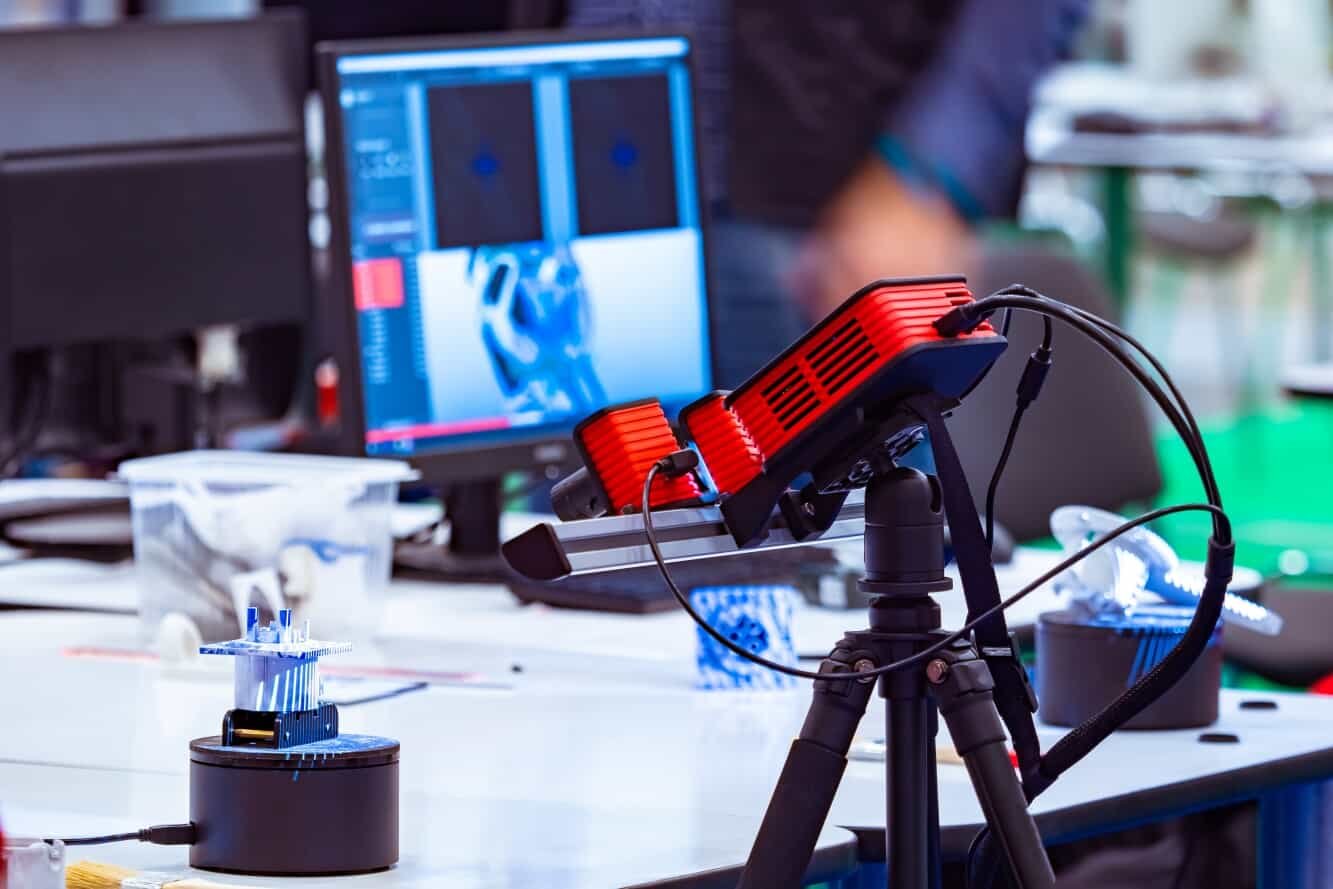
The Creaform Go! SCAN SPARK scanner uses structured light. It provides high accuracy in capturing complex shapes that other tools struggle to handle. Particularly effective for 3D scanning in architecture and engineering applications that require detailed surface capture.

Pros:
Lightweight design reduces operator fatigue during extended scanning sessions. Plug-and-play operation means you can capture data within minutes of unboxing. The targetless scanning approach eliminates prep work, speeding up your entire process.
Cons:
Structured light technology performs best indoors or under controlled lighting conditions. Bright sunlight can interfere with accuracy, limiting outdoor applications.
Best For:
Design validation, manufacturing inspection, and retrofitting projects where you’re capturing intricate details on mechanical systems, architectural ornaments, or custom fabrications.
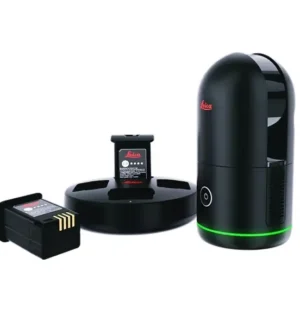
5. Leica BLK360 G2 Imaging Laser Scanner
The Leica BLK360 G2 is a small, accurate 3D scanner for construction. It quickly captures 3D data automatically. Its price is reasonable for growing companies.
Pros:
Outstanding value for the performance level. HDR imaging captures color information alongside spatial data, creating visually rich models. Cloud integration simplifies data management and team collaboration. The straightforward operation means minimal training time.
Cons:
The moderate range makes it best suited for small to mid-sized projects. Large sites will require more scan positions compared to long-range alternatives.
Best For:
General contractors, architects, and building documentation teams who need reliable scanning capability without enterprise-level pricing.
Advantages and Disadvantages of 3D Laser Scanning in Construction
Using 3D laser scanning in construction has both advantages and disadvantages.
Advantages
Understanding the advantages of 3D laser scanning in construction helps justify the investment for firms considering the technology. Reducing costly rework starts with accurate documentation of as-is conditions.
When you know what exists before design or construction starts, you avoid surprises. This helps prevent change orders and delays. Supporting BIM workflows for renovations and new buildings creates one source of truth. All project stakeholders can use this throughout the building lifecycle.
Enhanced visualization and communication with stakeholders removes ambiguity from project discussions. Clients see precisely what’s being proposed. Subcontractors understand where their work interfaces with existing structures. Building owners get comprehensive facility documentation for future maintenance and modifications.
Precise volumetric and deviation assessments let you quantify earthwork, verify installation tolerances, and demonstrate quality compliance with complex data rather than subjective evaluations.
Disadvantages
The high initial investment for premium 3D laser scanning equipment requires careful consideration of your project volume and budget. Firms need to calculate return on investment. They should consider time savings, fewer errors, and the competitive advantages of the technology.
Trained personnel for data processing are essential. Capturing point clouds is straightforward, but turning that raw data into functional deliverables requires software knowledge and technical skill. Large data files may need robust computing systems with sufficient processing power and storage capacity to handle projects efficiently.
Choosing the Right 3D Laser Scanner Solution for Your Project
Start by defining your scanning needs. Are you primarily working indoors or outdoors? Does your work require mobility, or do tripod-based systems fit your typical workflow?
What’s the scale of your average project? Single rooms, entire buildings, or multi-acre sites?
Consider your budget and the data processing software you already use or plan to adopt. Compatibility matters as much as the scanner’s specifications. Evaluate after-sales services, calibration schedules, and maintenance requirements. Equipment that sits idle waiting for repairs doesn’t generate value.
At Harper Surveying, we help you choose equipment that maximizes precision, speed, and value for every construction or surveying project. Our experience since 2001 has shown us how different technologies perform in real-world conditions across countless applications.
Why Professionals Trust Harper Surveying
We have been a trusted supplier since 2001. We build strong relationships with professionals who need reliable equipment for their projects. Free expert consultation and technical support mean you’re never left figuring things out alone. Our team understands the challenges you face because we work with surveyors, architects, engineers, and contractors every day.
Fast worldwide delivery (typically within 7 days) keeps your projects moving forward. We check equipment for quality and reliability before it is shipped. Our competitive prices include a full warranty and replacement policy to protect your investment.
Final Thoughts
Adopting 3D laser scanning in construction and surveying isn’t just about keeping up with technology; it’s about advancing the industry. It’s about delivering better results for your clients while improving your team’s efficiency and your firm’s profitability. The scanners we’ve discussed represent proven solutions that professionals rely on for accurate data capture across diverse applications.
At Harper Surveying, our mission is to empower professionals with reliable, affordable, and high-precision solutions. We understand that choosing the right scanner involves balancing performance, budget, and long-term support. That’s why we’re committed to helping you find equipment that fits your specific needs.
Ready to upgrade your building documentation process? Explore our range of 3D laser scanning equipment and take your projects to the next level with Harper Surveying.
Frequently Asked Questions
What is the best 3D laser scanner for construction?
The best 3D laser scanner for building construction depends on your project requirements. For large-scale sites, the Leica RTC360 and Trimble X9 offer speed and range. For interior work and mobility, the Leica BLK2GO excels. Budget-conscious firms often find the Leica BLK360 G2 provides excellent value.
How accurate are 3D laser scanners for buildings?
Modern high-accuracy 3D scanners for construction achieve accuracies of 1-6 mm, depending on the model and conditions. This precision far exceeds traditional measurement methods and meets the requirements for most construction and surveying applications.
Can 3D laser scanning reduce project costs?
Yes. Faster data collection reduces field time and labor costs. Accurate as-built documentation prevents costly rework from measurement errors. Better coordination reduces conflicts and delays that impact budgets. These represent just some of the advantages of 3D laser scanning in construction.
What software is compatible with 3D laser scanners?
Most 3D laser scanning equipment exports data that works with main BIM and CAD platforms. These include Autodesk Revit, AutoCAD, Trimble RealWorks, and Leica Cyclone. Specific compatibility varies by model, so we help you verify that your chosen scanner works with your existing software.
Is 3D scanning worth the investment for small contractors?
For contractors who often do renovation work or tenant improvements, compact scanners like the BLK360 G2 can save time. They can also reduce errors, making them worth the investment. We can help you calculate potential return on investment based on your typical project mix.